“And now, O LORD, you are God, and you have promised this good thing to your servant.” (1 Chron. 17:26)
We happen upon David as he prays (vv.16-27) in response to God’s gracious initiative to him (vv.1-15). The Lord had promised to build David a “house” (i.e., a dynasty). In so doing, God promised to put one of David’s sons on his throne and that son would be the one to build Him a “house” (i.e., a temple). We can see, thus, the keyword throughout this chapter is “house.” In response to this divine grace and promise David responded in humble, overwhelmed faith.
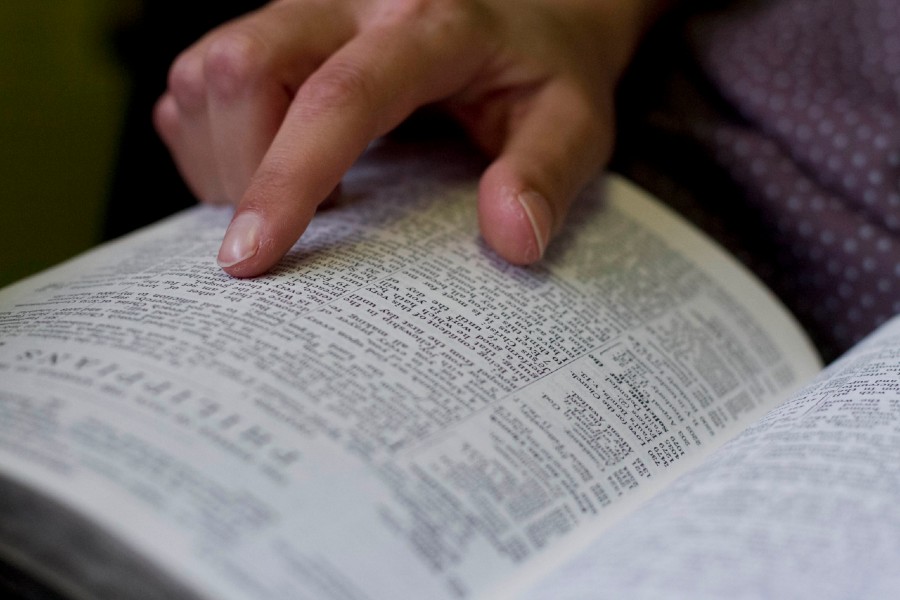
Though this is a unique moment in God’s saving plan, David’s response to the Lord illustrates what should be our response to God in His gracious dealings with us through Jesus. He has told us that in Jesus “all the promises of God find their Yes” (2 Cor. 1:20). We too, then, like David, should sit before the Lord (1 Chron. 17:16) amazed by His grace, an open Bible before us, our finger on the promise of God, praying, “O LORD, you are God, and you have promised this good thing to your servant.”
In this way, by faith, through Christ we claim the gracious promises of God made to us.
Consider more closely David’s response that we might be the more careful to make it our own.
We begin by approaching the “LORD.” The English translation uses all capitals to signal that the original Hebrew text has here God’s personal name, Yahweh. This name was revealed to Moses at the burning bush as he wondered at God’s promise to use him to bring His people out of slavery (Exodus 3:14). It is related to the Hebrew verb “be.” He is the great “I AM.” Wherever we are and whatever we face, God is “I AM.” Not “I was.” Not just “I will be.” “I AM” in this moment with you everything I have ever been or will be. It signals that God is eternal, yes. He is without beginning or end. But it further sets God before us as self-existing, without dependence upon anything beyond Himself. Before anything else was, God was, undiminished and utterly complete. If all else were suddenly vaporized, God would still exist without compromise or need, for His being and existence arise from within Himself and are dependent upon nothing. He comes to us and out of nothing in us but everything within Him, He makes and keeps a covenant of grace with us through His Son. One expression of that grace is the promise upon which you have placed your finger today.
But He is also here designed “God.” The Hebrew here is Elohim. It emphasizes His sovereignty and power. Nothing can oppose what He wills. Nothing can block Him in fulfilling His promises. What God in His grace wills cannot but come to pass!
So with Bible open, your heart bowed before this magnificent God and LORD, your finger on one of His gracious promises in the Bible, you pray: “you have promised this good thing to your servant.” This kind of faith is not presumptuous. It merely follows God’s lead. It is not brash. It honors the God who spoke the promise with every intention of fulfilling it in His children’s lives.
But note the way you designated yourself: “your servant.” Take a moment and reestablish that fact before the Lord in prayer. Take that place at the foot of His throne. Humble yourself. Wait until you can do so authentically, then tell Him: “I am bowed at your feet, poised to do your will. Whatever, wherever, with whomever, for however long is required. I am ready to do your will, O Lord, but as I am, I have my finger on this, your promise, to me. I hold it up before you. As I rise and go to do your will only to return to bow again at your feet, I do so with the bold expectation that you will uphold your promise, make it my experience, and thus prove your faithfulness.”
These are not magic words. But this is the path to laying hold of and living in the fulfillment of God’s promises to us in the Bible.
Lord, make this promise-led, promise-fed, promise-tread path be our perpetual experience with you in this world. Amen.
 First, a key. Isaiah dangles before us a tantalizing possibility: God “will be the sure foundation for your times, a rich store of salvation and wisdom and knowledge.” Sounds inviting. How do I get in on this kind of relationship to God? The prophet continues: “the fear of the LORD is the key to this treasure” (Isaiah 33:6, NIV). Can you see the treasure chest laden with riches? In your hand is the key to unlock it and make it yours.